Introduction
An electrical substation is a crucial component of the power grid that performs several important functions in the transmission and distribution of electrical energy. Substations serve as intermediate points between power generation facilities and end consumers, enabling efficient and safe delivery of electricity across vast distances.
The primary roles of substations in the power system include:
- Voltage Transformation: Changing voltage levels to facilitate efficient transmission and safe distribution
- Power Routing: Directing electrical power to different transmission or distribution lines
- System Protection: Detecting faults and isolating problematic sections to maintain reliability
- Load Control: Monitoring and controlling power flow to match supply with demand
Substations are strategically located throughout the power grid to optimize the flow of electricity from generation sources to consumers. They range in size from small distribution substations serving local neighborhoods to massive transmission substations handling thousands of megawatts of power.
Major Components
A typical electrical substation consists of several key components, each serving a specific function in the safe and efficient operation of the power system:
Power Transformers
Transformers are the heart of most substations, enabling voltage transformation between different levels of the power system:
- Step-Up Transformers: Increase voltage for efficient long-distance transmission
- Step-Down Transformers: Decrease voltage for safe distribution to consumers
- Auto Transformers: Provide variable voltage transformation with a single winding
Transformers operate on the principle of electromagnetic induction and typically use mineral oil for cooling and insulation.
Circuit Breakers
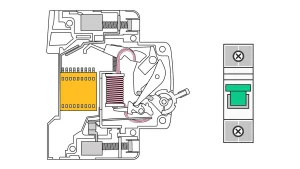
Circuit breakers are automatic switching devices that protect the electrical system by interrupting current flow during fault conditions:
- Function: Automatically open when fault currents are detected
- Types: Oil, air blast, SF6, and vacuum circuit breakers
- Operation: Can be operated manually or automatically by protective relays
- Maintenance: Require regular inspection and testing
Busbars
Busbars are heavy conductors that serve as common connection points for multiple circuits within the substation:
- Material: Usually copper or aluminum bars with large cross-sectional area
- Configuration: May be arranged in single bus, double bus, or ring bus configurations
- Function: Distribute power between incoming and outgoing circuits
- Insulation: Supported by porcelain or polymer insulators
Disconnect Switches
Disconnect switches (also called isolators) provide a visible gap in the circuit for maintenance and safety:
- Purpose: Isolate equipment for maintenance or fault clearance
- Operation: Manual operation only (no automatic fault interruption)
- Safety: Cannot be operated under load conditions
- Types: Single-break, double-break, and gang-operated switches
Lightning Arresters
Lightning arresters protect substation equipment from voltage surges caused by lightning strikes or switching operations:
- Function: Limit overvoltages to safe levels by conducting surge currents to ground
- Technology: Metal oxide varistor (MOV) technology in modern arresters
- Placement: Installed at critical points throughout the substation
- Maintenance: Require periodic testing and inspection
The Control House
The control house (also called control room or control building) serves as the “brain” of the substation, housing critical control and monitoring equipment:
- Detect abnormal conditions such as overcurrent, overvoltage, or frequency deviations
- Initiate circuit breaker operation to isolate faults
- Modern digital relays provide advanced protection algorithms
- Provide manual control of circuit breakers and switches
- Display status information for all substation equipment
- Interface with remote control systems for automated operation
- Enable remote monitoring and control from system operators
- Facilitate data exchange with other substations and control centers
- Support SCADA (Supervisory Control and Data Acquisition) systems
- Measure power flow, voltage, and current for billing and system analysis
- Record historical data for system planning and troubleshooting
Types of Substations
Substations are classified based on their function in the power system:
- Located at power generating stations
- Increase generator voltage (typically 11-33 kV) to transmission levels (220-765 kV)
- Enable efficient long-distance power transmission
- Connect high-voltage transmission lines
- Route power between different transmission corridors
- May include both step-up and step-down transformers
- Reduce transmission voltage to distribution levels (11-33 kV)
- Supply power to local distribution networks
- Often located near population centers
- Serve large industrial or commercial customers
- May be owned and operated by the customer
- Provide customized voltage and protection for specific needs
Conclusion
Electrical substations are complex facilities that play a vital role in the reliable delivery of electricity from generation sources to end users. Each component within a substation serves a specific function in ensuring safe, efficient, and reliable power delivery.
As power systems continue to evolve with the integration of renewable energy sources and smart grid technologies, substations are becoming more sophisticated with digital controls, advanced protection systems, and enhanced monitoring capabilities. Understanding the components and functions of substations is essential for anyone working in the electrical power industry.